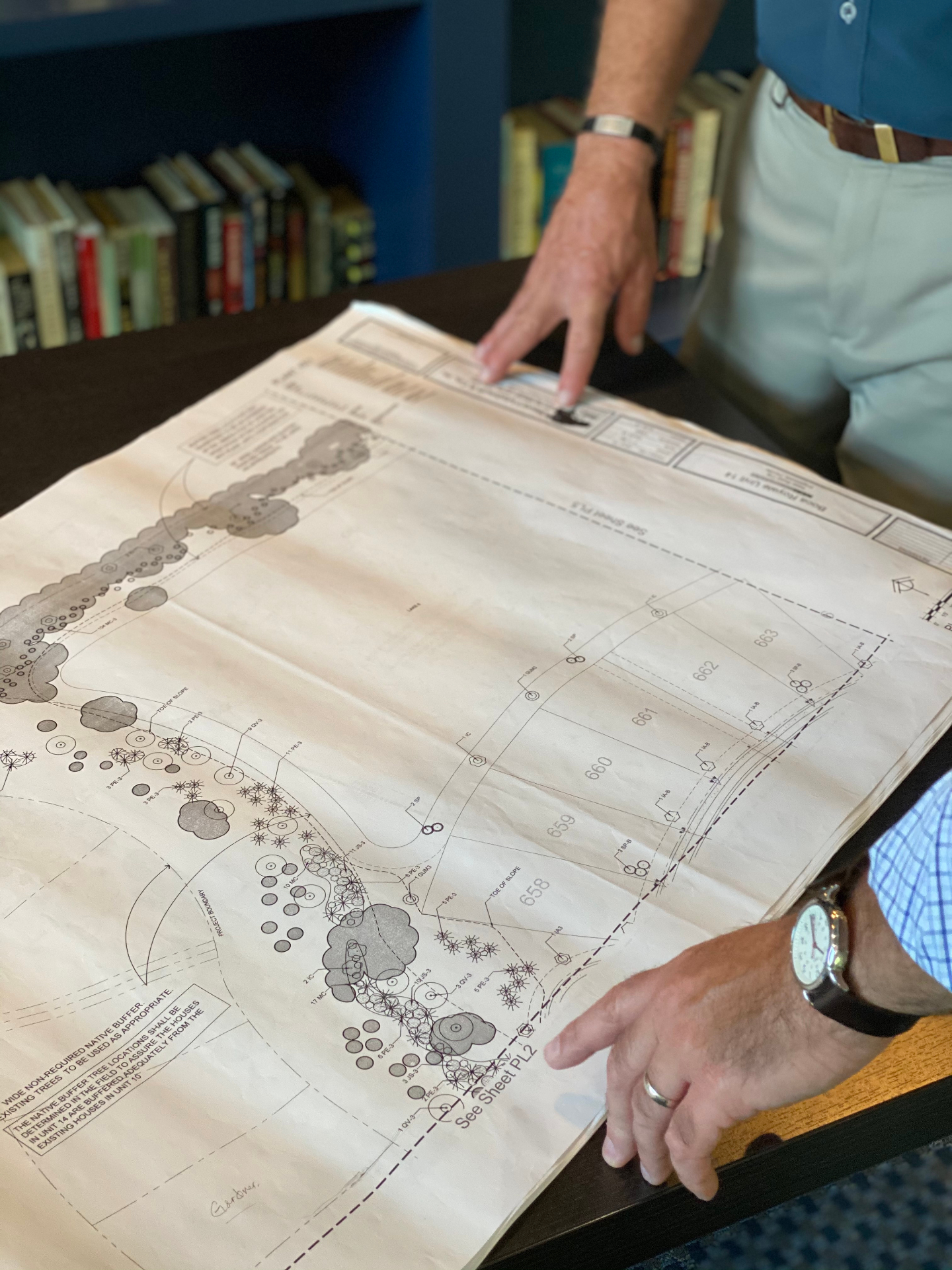
Why Construction Documents Matter
Most clients never read the construction documents. That's fine. They're not supposed to. But the contractor will. The municipality will. The inspector will. And three years from now, when the plant material is underperforming and nobody can agree on who's responsible, the CD set will be the only document in the room that tells the truth about what was actually specified and why.
A professional landscape architect doesn't just design a landscape. They document it well enough that it can be built correctly, inspected accurately, and defended in the field when something doesn't go as planned.
That's what construction documents are. And that's why they matter more than any rendering ever produced for the same project.
What a CD Set Actually Contains
Landscape architecture services don't end at concept. The construction document phase is where design intent gets translated into buildable reality — and the gap between those two things is where most landscape failures begin.
A complete CD set from a professional landscape architect includes code-required plans, grading and drainage details, irrigation design, plant schedules with approved substitutions, hardscape specifications, construction details for walls, edging, and paving, and signed and sealed documents that a municipality will accept for permit. It includes opinions of probable construction cost, so clients aren't surprised at bid time. It includes the notes and callouts that tell a contractor exactly how deep to plant, what soil amendment to use, and how to handle the transitions that don't show up cleanly on a plan.
These aren't bureaucratic formalities. They are the instructions for building something that will last.
What Happens When They're Weak
The failure list is predictable. We've seen it enough times to recite it.
High plant mortality in the first two summers because the species were underspecified for the microclimate. Irrigation band-aids installed within a year because the system was designed for the plan and not for the plants. Patchy appearance across a community because substitutions were made in the field without guidance. Finger-pointing between the contractor, the CAM, and the design team because nobody's document was specific enough to settle the dispute. Board meetings dominated by landscape issues that were never supposed to be issues. A full replanting cycle five years earlier than anyone budgeted for.
All of it traces back to the same structural gap: construction documents that were drawn to satisfy a submittal, not to guide a build.
A professional landscape architect who has spent time in the field after construction — walking sites, reviewing installations, identifying what went wrong and why — writes CDs differently. They anticipate the moments when a contractor will take the path of least resistance. They specify in enough detail that the path of least resistance is also the right one.
Oversight Doesn't End at Permit
Producing the documents is one part of the landscape architecture services we provide. Protecting them in the field is the other.
Once construction begins, we conduct regular site walks to confirm that specifications are being met and that correct building methods are being followed. Not as a formality. As a professional obligation to the design and to the client who trusted us to see it through.
That means verifying planting depths and root ball preparation. Confirming irrigation head placement against the design intent before systems are buried. Reviewing material installations against specifications before they're signed off. Catching substitutions before they become problems. Identifying early indicators of plant stress while there's still time to correct the cause rather than replace the plant.
This is what long-term plant health actually requires. Not just a good plan. Not just a complete CD set. A professional landscape architect who stays present through construction and holds the line between what was designed and what gets built.
For a master-planned community, that field presence is what protects the developer's investment and the resident's experience of the landscape they were promised. For a luxury homeowner, it's the difference between a finished landscape that performs and one that slowly drifts from the vision that was sold to them at presentation.
The Document That Holds Everything Together
Construction documents are not the most exciting part of landscape architecture services but arguably, they are the most important.
We write them to be built, not to be filed. We stand behind them in the field, on site, every time. That's what a professional landscape architect owes the work, and your long-term enjoyment.