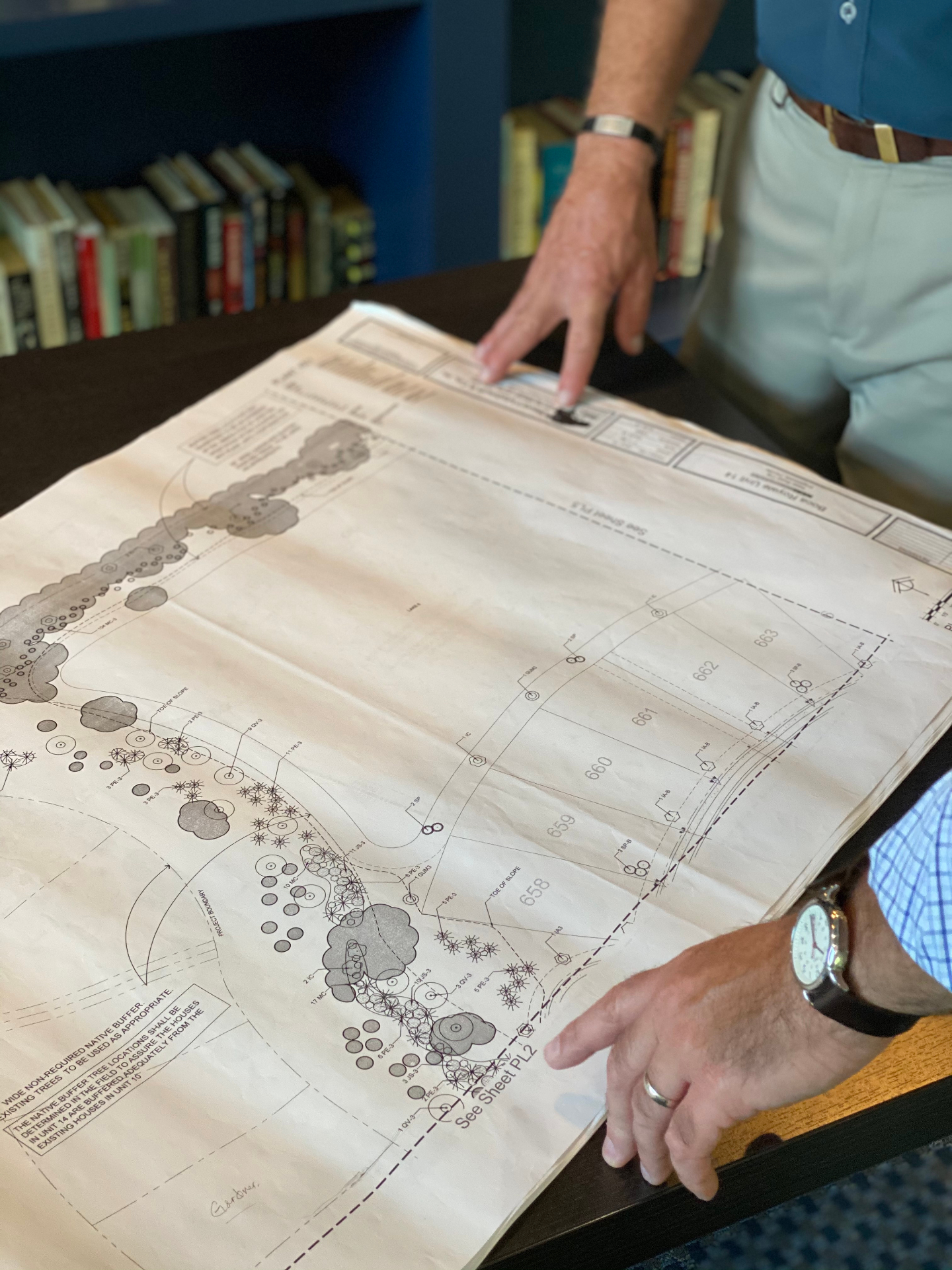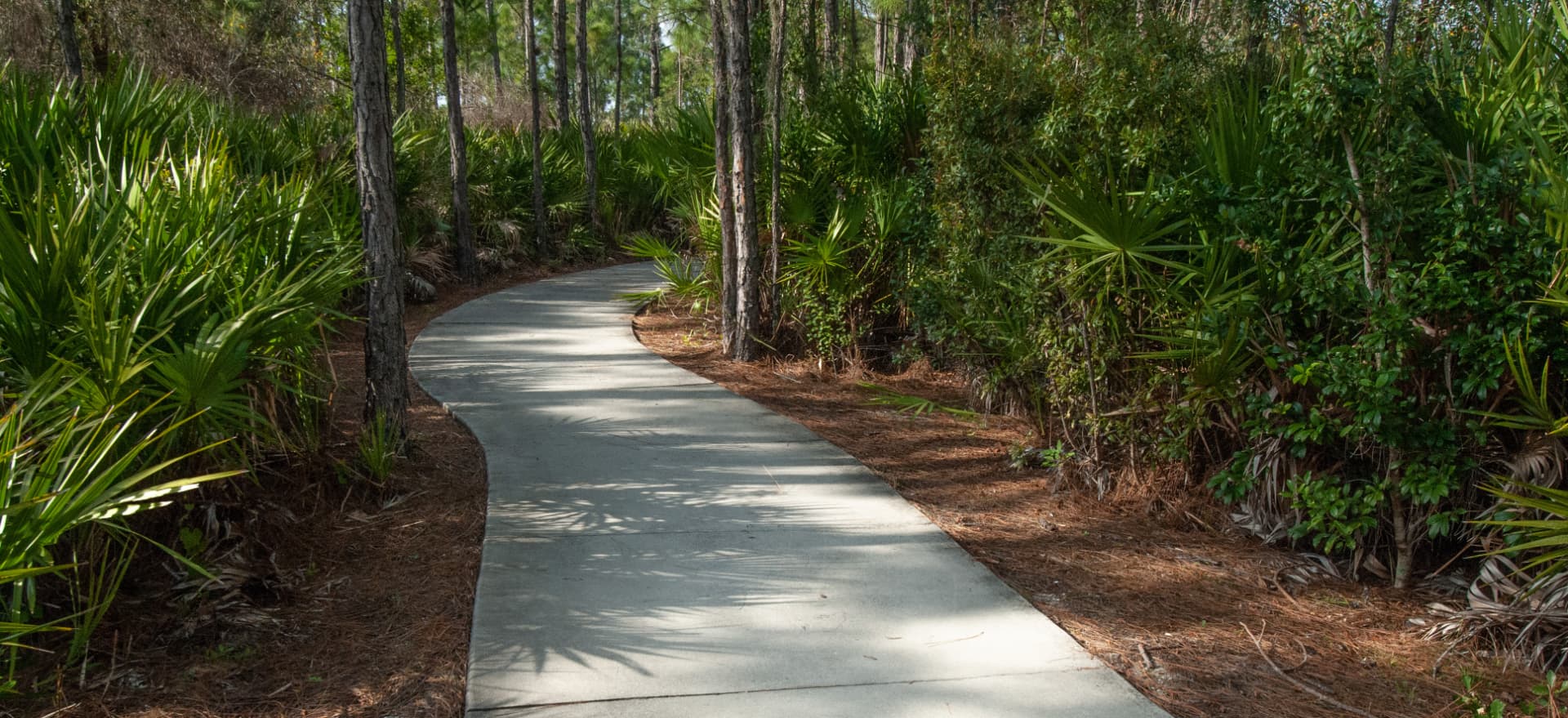
Why Hardscape Design Is Really Half The Landscape
Most people hear "hardscape" and picture the concrete: The driveway, the retaining wall, the slab by a pool to stick the barbecue; you know, the part you value-engineer down when the budget gets tight.
In all my years designing outdoor spaces on Florida's Gulf Coast, I can tell you that hardscape design is not just a functional, non-living design element or a clever afterthought needed to pick up the slack. It's half the landscape!
So what is hardscape, really? In one sense, it's the bones of a place: the paths, walls, monuments, gates, rec areas, and lighting that tell you where to walk and how to feel when you get there. Here's the part most people miss: Hardscape without landscape is desolate. Landscape without hardscape is inaccessible.
Good hardscape design is the craft of marrying the two so neither one is ever working alone. In this article, we'll look at what hardscape design actually is, where most Florida communities get it wrong, and how the right approach turns a raw site into a place people remember.
Hardscape And Softscape Are A Pair, Not Parts
Every outdoor space is really two materials in conversation. There's the built layer and the living one. What is hardscape in that pairing?
It's the permanent, buildable side: stone, pavers, timber, bronze, the structures that hold a place together.
The softscape is everything alive, the trees, the shrubs, the grasses, the color that moves when the wind does. One without the other always fails. Hardscape with no softscape feels like a parking lot. Softscape with no hardscape is a thicket you can admire but can't walk into.
The whole point of our work is the marriage of landscape and design, where the two stop being separate line items on a budget and start reading as one experience. That is where hardscape design earns its keep.
The most interesting question is: How do you design hardscapes and landscapes so that they don't appear designed at all?
In Florida, You've Seen This Type Of Hardscape Design
Recently, we were called in to evaluate the plans for a 3,000-acre development, and the entry looked like a hundred others I've driven past. A tower, a sign, and a three-rail fence. That three-rail fence shows up everywhere down here, usually because the land used to be a ranch, as if a split rail somehow conveys a heritage and a status that set one community apart from the next.
It doesn't.
They all look the same. That's the trap of hardscape design done to a budget instead of to an idea. It photographs fine and says nothing.
But here's something else the best developers know: Boring is expensive. When the bones of a community have no point of view, the community has no identity, and a buyer feels that the second they drive through the gate, even if they can't tell you why.
And for a developer, this has immediate negative effects on sales and lease velocity. In other words, no one wants to buy into mediocre. Then it gets worse because all of a sudden in conversation, that prospect is bad-mouthing your development at the country club and all of a sudden, you've got a cluster of would-be buyers walking around saying, "Oh yeah, I heard that 'your-brand-communities' is building another subdivision and it looks cheap."
Ouch.
One Idea, Running Through Everything
The fix isn't "more stuff."
It's one idea carried all the way through. On the communities we're proudest of, there's a single thread running through the whole site. We might take one line of cast bronze and run it through the entry paving, let it rise across the face of the stone monument, then set it into the gravel beds further in, so every space quietly belongs to the same story.
The materials stay restrained on purpose: weathered timber, honed shellstone, aged metal that earns a patina, lighting warm enough to feel like evening instead of a floodlit lot. That is hardscape design as identity, not decoration. It's the detail a resident feels on every single walk without once stopping to notice it. That's the whole point.
Built To Mature, Not To Fade
There's a difference between finishes that peak on opening day and materials that get better with age. Cheap hardscape looks sharp in the sales brochure and tired by year three. The pavers settle wrong, the paint flakes, the stamped concrete starts showing its seams. Real hardscape design chooses for the decade, not the ribbon-cutting. Bronze that deepens as it weathers. Stone that softens in the Florida sun instead of fading out. Timber that grays into something warmer than the day it went in. We design the built layer to mature right alongside the planting, so the place a buyer falls in love with is the same place they're still proud of ten years later.
Why embrace weathered materials?
Well, there's store-bought, and plastic, and templated.
Nature isn't that.
Nature has texture. It has weight. It has depth. It has nuance. It has discovery.
Some things do get better with time. So long as it lasts. And we choose all our materials accordingly.
Natural Immersion. Wild Spaces Stay Wild
Here's the belief under all of it. Hardscape is what makes a Florida landscape usable, the paths, the arrival, the places to gather. Softscape is what keeps it alive, the habitat, the shade, the color. Every hardscape design decision we make comes back to one idea: immersion into the environment (even if that means not a resort grounds)!
Don't get me wrong. Everyone loves a tropical resort. But the design intent is all about creating another experience entirely. A natural environment at home has a richness and a depth that stamped concrete alone cannot achieve.
And another idea about all that: knowing the balance is a real skill.
Recently, we had heard about a community that pulled out a whole run of native grass along its main drive because a few residents worried about what might be living in it. I understand the instinct, but you can't eliminate Florida from Florida, and if we're really being honest, there's risk in walking out your own front door!
The craft is balancing habitat, planting, and people into a fair compromise, not scorching the earth and rolling out sod. The same discipline shows up in color. New owners move down and tell me they want all palms, or all variegated plants for color. Both choices quietly kill the thing they're chasing, because impact comes from contrast: color, texture, and form playing off each other. A few bright plants read as striking only when there's green around them to read against. Restraint is what makes the loud parts land.
Build The Florida That Belongs Here
Before anything we see around us was here, Florida was a mosaic of wetlands, pine flatwoods, prairie and dynamic coast.
As John Muir put it, when he first discovered Florida for himself:
I wander in dense Florida forests... with magnolias, tupelo, live-oak, and whole forests of strange trees... the ground covered with vines and palmettos, making an impenetrable jungle.
And it's that last part that gives birth to the needs for hardscape design. Not to overtake the dense Florida forests, but to allow immersion within them.
Hardscape design done right is what makes Florida reachable, and what makes a place worth remembering long after the model homes sell. And, while I'm at it, it preserves the environment that 1000 people a day move here to enjoy.
When landscape and design move as one, under a single idea, you get something no code-minimum entry and no three-rail fence can fake: a community that could only be here.
If you're a developer looking to make something iconic, sustainable, and valuable for all, ask us about our Vision Packages. We'll share all the details about what's possible in a portfolio that's easy to understand and outlines everything down to the street names.
If you're a homeowner looking to make the most of your exterior space, a conversation, walk-through and set of renders is sometimes all it takes to see what's possible.
Either way, if you want to see a built environment look at home here, send us an email!
More Field Notes
Why Amenity Center Design Makes or Breaks Your Community
5 Essential Benefits Of Working With A Community Landscape Designer
How a Land Planner Reads Like a Landscape Architect
Planting Architecture & Elevations: Where Vision Meets Vegetation