5 Essential Benefits Of Working With A Community Landscape Designer
Most people think that the landscape is the "pretty" part of a community or the extra line on the budget you trim when trying to reconcile community cash flow.
I've spent more than three decades designing community landscapes on Florida's Gulf Coast, and I've seen how this line of thinking consistently undermines development projects and community operations from an HOA's perspective.
New clients often ask me what a community landscape designer actually does that a landscaper doesn't (with the thinking that a "landscaper" is cheaper). Maintenance is one thing.
Sustainability, compliance, and reliability is something else entirely.
The thing is, the landscape is the first thing a buyer feels and community members will be immersed in. It's the largest thing an HOA maintains, and the one asset that either grows in value or quietly falls apart over a decade. A lot of developers and boards start the same way, typing "landscape designers near me" into a search bar and hoping the map turns up someone who can make it look finished. Finished on day one is easy. Still right in year ten is the whole job.
Here is what actually changes when you work with a community landscape designer instead of treating the landscape as decoration.
Your Landscape Is Your Brand, Not Your Garnish
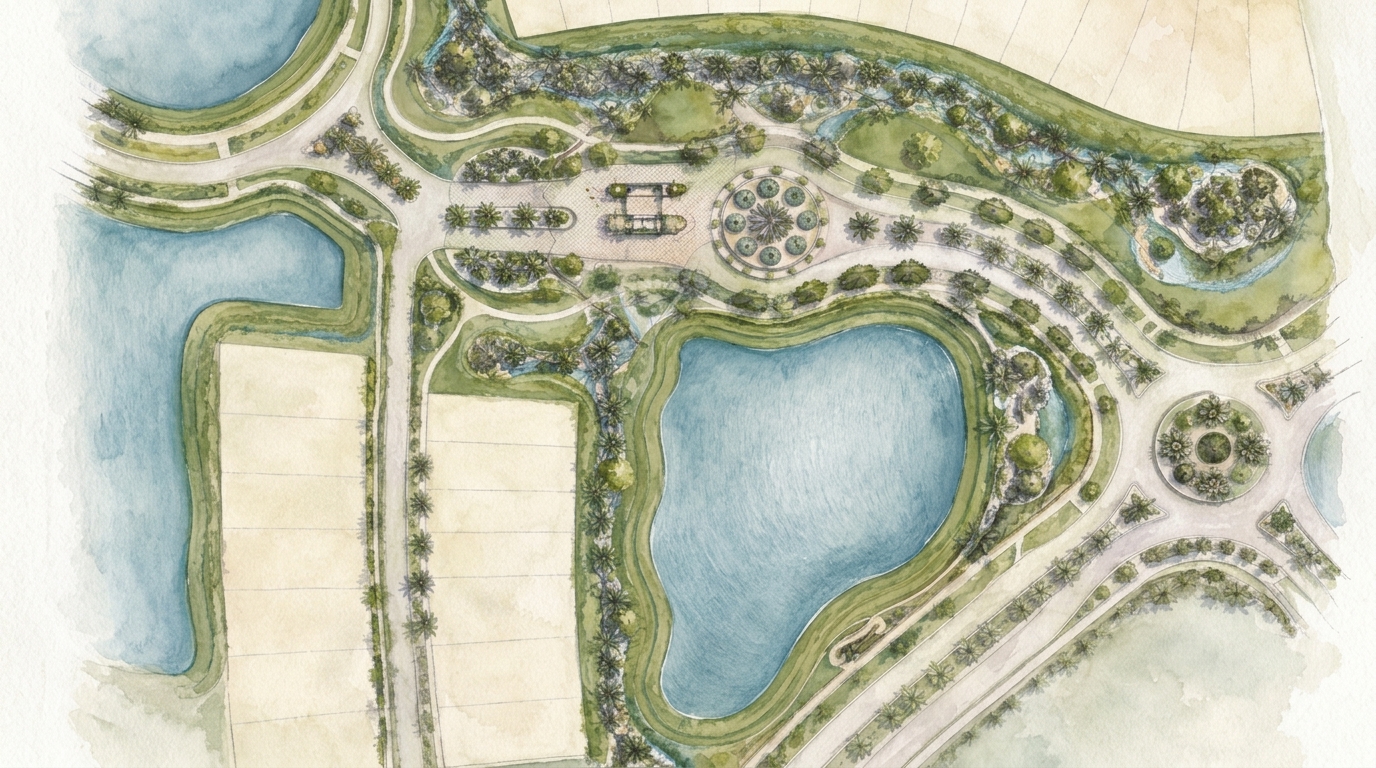
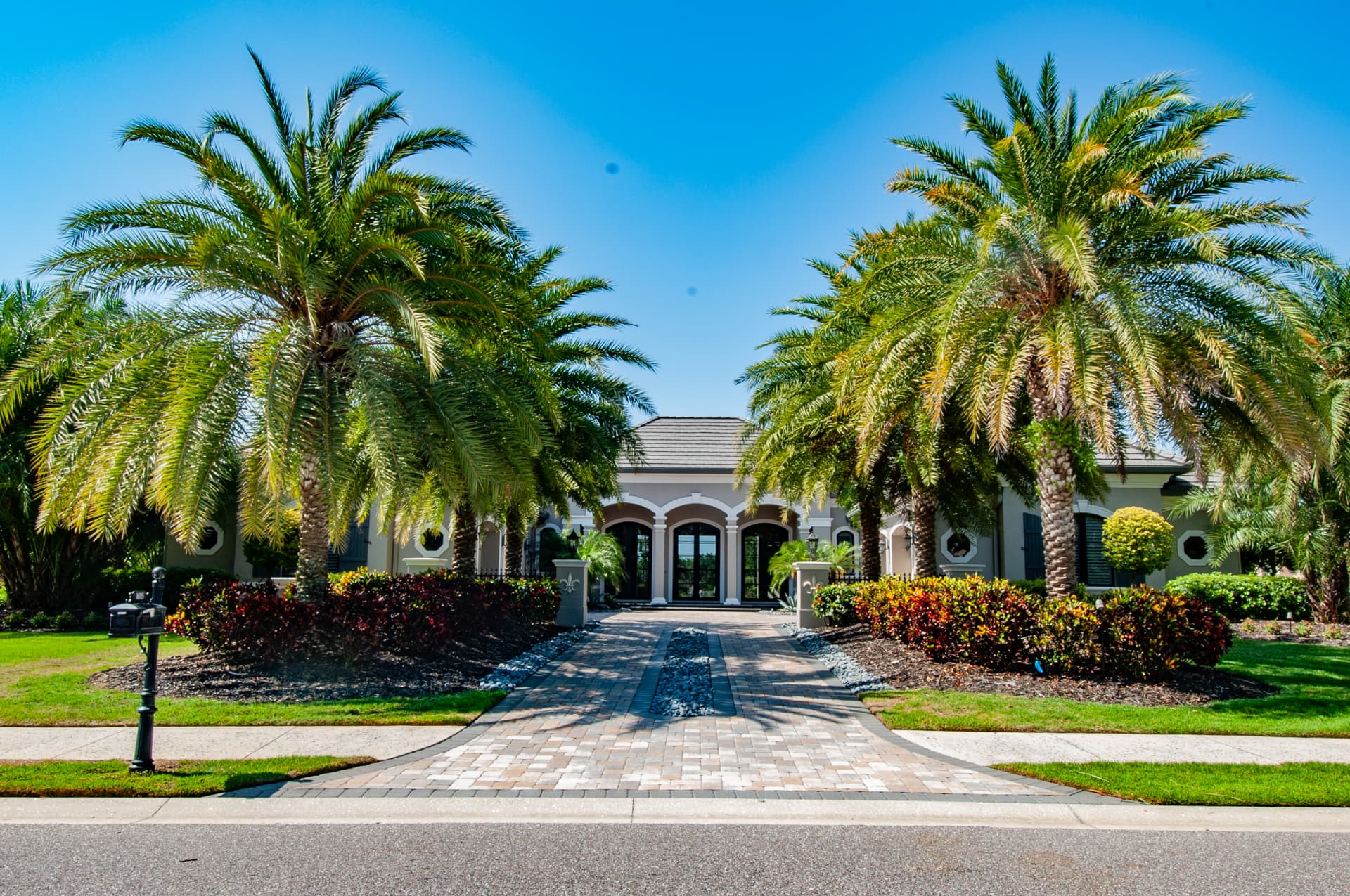
A community's landscape is its brand made physical. When a site gets cleared to the property line, sod rolls out like carpet, and three palms stand spaced like fence posts, it tells every buyer the same thing: this place could be anywhere.
Going code minimum is death for sales velocity, brand reputation, and lasting value.
When it's designed with what belongs here, it says something better. It says someone knew this ground and this community is worth the price on the lot. That isn't sentiment; it's margin. A community landscape designer who understands Florida can make a developer look like a steward instead of a land flipper, and that reputation follows you into the next project and the one after.
Skip it, and you compete on amenities anyone can copy, with none of the character that makes people choose you.
Our landscape design firm is usually the first call for developers looking to create unique, plan-based designs that deliver a complete residential experience.
When A Board Is At War, We Become The Neutral Voice In The Room
Landscape problems in a community turn political faster than almost anything. Residents blame the board, the board blames the contractor, and everyone blames the budget (while the treasurer secretly curses the community members who never pay their dues).
That's a lot of stress, and there is a better way.
I get called in when a common area is failing and nobody can agree on why. My job in that room isn't to take a side. It's to say plainly what's wrong, what it will cost to fix, and what happens if it's ignored. In our experience, it's that kind of clarity that ends the argument. Boards and community managers tell me the real value isn't the drawing, it's finally having someone technical they can hand the problem to and stop losing sleep over it. The right community landscape designer takes the conflict off your plate and gives you an answer you can defend to your residents.
A Design Is Only As Good As The Decade That Follows It
Typically, a developer will design a landscape once. It gets maintained for the next twenty years by crews who were never in the room when we made the decisions. Left alone, things drift. A maintenance company gets told to "add color" and reaches for the same loud variegated plants on every property (what I call clown vomit), and slowly, a cohesive, native community design erodes into a circus of material that gets destroyed every hurricane season.
I've watched a club cut its macho fern and saw palmetto to the ground after a single complaint about wildlife, and a community pull out the muhly grass lining its entry for the same reason. Both erased years of intent in an afternoon.
This is where a real community landscape designer earns its position. Decisions aren't made with the jerk of a knee. It's considered, with your ROI and enjoyment always top of mind. Our team stays in the field long after the plans are stamped to catch that drift before it costs you. The community landscapes that still look intentional in year ten are the ones somebody kept watching.
Our signature is making this job appear easy. Almost as if we're not there at all, with nature simply taking its course.
Sustainable. Beautiful. Natural.
Code-minimum planting might look fine the day it goes in but starts dying in its second summer. Then somebody pays to replace it, either the developer under warranty or the HOA out of reserves.
SWSLA designs with plants that belong to this climate, this soil, and the way these communities are actually irrigated and maintained, because a plant that thrives is a plant nobody has to buy twice.
Over the years I've learned exactly what survives a Gulf Coast summer and what quietly gives up in it. A community landscape designer who designs for reality instead of the rendering saves you the replacement invoice you never budgeted for. That's the quiet math most people miss until the second summer arrives.
Whether you're a developer or an HOA board member, you need someone on your team who can create peace of mind with their knowledge about what thrives in South Florida — not someone who will smile and nod and buy whatever is on sale at Lowes.
Accountability From First Call To, Well, Forever
Plenty of the landscape designers near me on that same map will hand you a plan and walk away at permit approval. We don't work that way. When you bring us onto a community, you get senior judgment on every decision, direct access to me instead of a rotating cast of junior staff, and one line of accountability that runs from the first sketch through construction and into the season when the plants finally establish.
Developers get fewer surprises and faster delivery. Boards get less to coordinate. Having one community landscape designer carry the whole arc means the gaps between design and install don't become your problem. That continuity is the difference between a landscape that gets built and one that gets built right.
Build the Florida That Belongs Here
Everything I've learned in more than thirty years here comes down to one question: how do we build without erasing what made people want to be here in the first place? The landscape isn't the thing you cut to protect the budget. It's the thing that protects the budget, the brand, and the buyer's first impression for years after the sales center closes. We build with Florida, knowing what was here before the recent explosion.
If you're weighing whether to bring a community landscape designer onto your next community, that's the right instinct, and now is the right time. Start the conversation with me, or explore our work and see what staying in the field actually looks like.